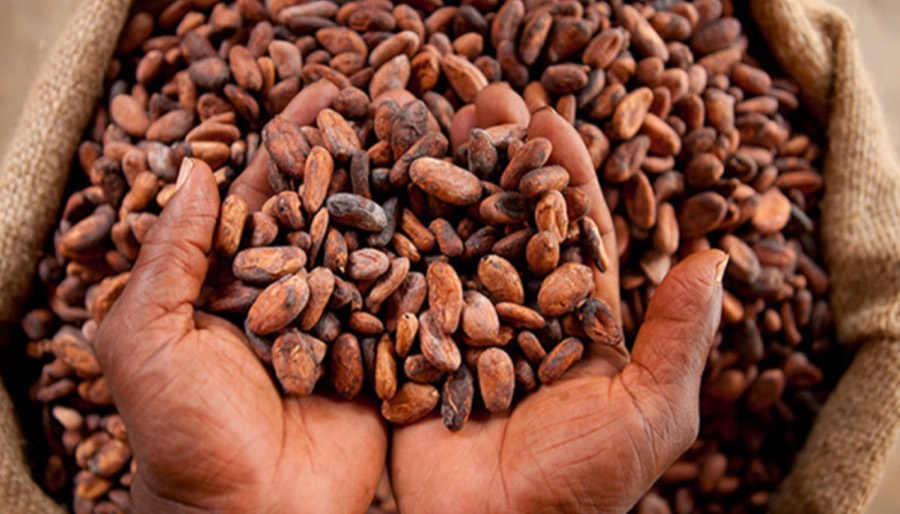
Two bags of cocoa beans can look almost identical from the outside and behave completely differently in a chocolate factory. That is why cocoa is never bought on appearance. Before any lot is approved for export, it goes through a set of simple but rigorous checks, and the most important of them is the cut test.
Why grading matters
The quality of a cocoa bean is mostly determined after harvest, during fermentation and drying. Well-fermented beans develop the precursors of chocolate flavour. Poorly fermented beans taste flat and astringent, and beans that are dried badly can become mouldy. Grading tells the buyer how well those steps were done.
The cut test
The cut test is the international standard method for assessing fermentation and defects.
- A representative sample of 300 beans is drawn from the lot.
- Each bean is cut lengthwise through the middle to expose the maximum cut surface.
- Both halves are examined in good light, and each bean is classified by what the inside shows.
Typical categories include:
- Well fermented: brown or purple-brown with an open, cracked texture.
- Slaty: dense, grey or slate-coloured, meaning the bean was not fermented at all.
- Mouldy: visible mould inside the bean.
- Insect-damaged: signs of insect boring or damage.
- Germinated: the bean has sprouted, leaving a hole.
- Flat: too thin to cut through, so there is little or no usable nib.
What makes Grade 1
Grading standards used in international trade set maximum levels for each defect. For Grade 1 (good fermented) cocoa, the commonly applied limits per 300 beans are:
| Defect | Grade 1 maximum |
|---|---|
| Mouldy beans | 3% |
| Slaty beans | 3% |
| Insect-damaged, germinated or flat beans (combined) | 3% |
Beans that exceed these limits may be classed as Grade 2 or sub-standard, and are priced accordingly.
Other checks
- Moisture content. Measured with a calibrated meter. Export cocoa should not exceed about 7.5% moisture. Wetter beans risk developing mould during the voyage.
- Bean count. The number of beans per 100 g, which indicates size and uniformity. Buyers often specify a maximum count.
- Foreign matter. Stones, twigs, husks and other debris should be removed before bagging.
- Smell and appearance. Beans should be free from smoky, hammy or other off-odours.
From grading to shipment
Lots that pass are bagged in jute, typically around 62.5 to 64 kg per bag, marked with lot numbers, and inspected again by an independent inspector before loading. The inspection certificate travels with the shipping documents, so the buyer can verify the grade before releasing payment.
How Talcora grades cocoa
Our field team runs cut tests and moisture checks on every lot at origin, and every shipment is independently inspected before it leaves the port. You can see the full process, from harvesting to shipping, on our cocoa page.
Looking for Grade 1 cocoa? Request a quotation with your volume, destination and preferred Incoterm.